BEGIN:VCALENDAR
VERSION:2.0
PRODID:-//ChamberMaster//Event Calendar 2.0//EN
METHOD:PUBLISH
X-PUBLISHED-TTL:P1H
REFRESH-INTERVAL:P1H
CALSCALE:GREGORIAN
BEGIN:VTIMEZONE
TZID:America/Chicago
BEGIN:DAYLIGHT
RRULE:FREQ=YEARLY;BYMONTH=3;BYDAY=2SU
DTSTART:20070101T000000
TZOFFSETFROM:-0600
TZOFFSETTO:-0500
TZNAME:Central Daylight Time
END:DAYLIGHT
BEGIN:STANDARD
RRULE:FREQ=YEARLY;BYMONTH=11;BYDAY=1SU
DTSTART:20070101T000000
TZOFFSETFROM:-0500
TZOFFSETTO:-0600
TZNAME:Central Standard Time
END:STANDARD
END:VTIMEZONE
BEGIN:VEVENT
DTSTART;TZID=America/Chicago:20261023T110000
DTEND;TZID=America/Chicago:20261023T140000
X-MICROSOFT-CDO-ALLDAYEVENT:FALSE
SUMMARY:Webinar: Beyond Restrictions: Assessing and Treating Sexual Offense Behavior in a Digital World
DESCRIPTION:When a client's harmful sexual behavior involves pornography\, social media\, gaming\, messaging apps\, or artificial intelligence\, restrictions and monitoring may be necessary. But they don't answer the bigger clinical questions: What should we be asking about online behavior? What does the research tell us? And how do we translate that information into meaningful assessment and treatment?Technology is changing how adolescents and adults engage in sexually harmful behavior\, creating new challenges for professionals responsible for assessment\, treatment\, and risk management. Keeping up requires more than knowing which apps are popular or how to restrict access.This practical\, three-hour workshop brings together three experienced professionals to explore how technology-related sexual behavior can be better understood and addressed in clinical practice.Participants will explore:Asking better questions: Understanding the online environments clients use and identifying what may be missing from current assessments.Applying the research: Using current evidence about technology-related sexual behavior to inform case conceptualization and treatment planning.Moving beyond restrictions: Identifying treatment strategies that address digital behavior alongside monitoring and risk-management measures.Recognizing our own reactions: Examining how assumptions\, biases\, and emotional responses to technology and sexual behavior can influence clinical judgment.Putting it into practice: Applying these concepts to case examples involving adolescents and adults.Using a practical framework that connects technology knowledge (TQ)\, research and clinical understanding (IQ)\, and emotional awareness (EQ)\, presenters will help participants navigate the increasingly complex intersection of technology\, sexual behavior\, and treatment.Who Should AttendThis workshop is designed for clinicians\, evaluators\, probation and parole professionals\, treatment supervisors\, and others who assess\, treat\, supervise\, or manage adolescents and adults involved in technology-related sexually harmful behavior.Learning ObjectivesDescribe key features of digital technologies and online environments relevant to sexually harmful behavior\, including questions to incorporate into social work assessment and treatment.Apply current research on technology-related sexual behavior to case conceptualization and treatment planning for adolescents and adults.Identify treatment strategies that address technology use and digital behavior alongside restrictions and risk-management measures.Evaluate how personal reactions\, assumptions\, biases\, and emotional responses to technology and sexual behavior influence clinical judgment and therapeutic interactions.Apply the Technology Quotient (TQ)\, Intelligence Quotient (IQ)\, and Emotional Quotient (EQ) framework to a case example involving technology-facilitated sexually harmful behaviorPresentersDavid L. Delmonico\, Ph.D.\, LPC is a Professor at Duquesne University in Pittsburgh\, Pennsylvania. Dr. Delmonico and a graduate of Kent State University's Counseling and Human Development Services Program. He conducts research\, consultation\, and training on topics such as cybersex\, cyberoffense\, and cybersafety. Dr. Delmonico also lectures on topics such as general Internet psychology and sexually addictive and compulsive behaviors. Dr. Delmonico is co-author of In the Shadows of the Net\, Cybersex Unhooked\, Cybersex Unplugged\, Illegal Images\, and The Illegal Images Workbook. He has published numerous scholarly articles on a variety of addiction\, technology\, and sexuality topics. Dr. Delmonico is Director of the Online Behavior Research and Education Center (OBREC) at Duquesne University and past Editor-in-Chief of the Sexual Addiction & Compulsivity journal.Elizabeth Griffin\, MA\, is a licensed Marriage and Family Therapist with forty years of experience in assessing and treating adolescents and adults struggling with problematic sexual behavior\, including online sexual offense behavior. She has worked in diverse settings\, including inpatient and outpatient facilities\, the military\, prisons\, and civil commitment programs. Ms. Griffin lectures and consults nationally on the assessment and treatment of sexually compulsive behavior and sexual offense behavior. For the past 30 years\, she has specialized in the evaluation and treatment of online sexual offense behavior. Ms. Griffin has also published numerous academic articles on issues related to problematic sexual behavior and is a co-owner of Internet Behavior Consulting. Her latest publication is The Illegal Images Workbook: Understanding and Changing Harmful Online Sexual Behavior. Ms. Griffin is a member of the Association for the Treatment and Prevention of Sexual Abuse (ATSA) and serves on its Board of Directors.Ali Tabb\, Ph.D.\, LCSW\, is a clinical social worker\, educator\, and researcher specializing in adolescents with harmful sexual behaviors\, adolescent sexuality\, pornography use\, and digital media. She is the owner of Breyta Counseling and Consulting and has more than a decade of clinical experience working with adolescents and families across residential\, outpatient\, and child advocacy settings. She is a Credentialed Sexually Abusive Youth Clinician and is licensed as a clinical social worker in Indiana and California. Dr. Tabb earned her Ph.D. in Social Work from Indiana University\, where her dissertation examined clinicians' perceptions and practices for addressing pornography use with adolescents in treatment for harmful sexual behaviors. She teaches social work courses at Indiana University and the University of Tennessee\, Knoxville\, and has presented nationally and internationally on pornography\, adolescent sexual behavior\, digital media\, and clinical practice with youth who have engaged in harmful sexual behaviors. Her scholarship also includes research on gender-diverse youth and access to gender-affirming care. Dr. Tabb is a member of the Association for the Treatment and Prevention of Sexual Abuse (ATSA) and serves on its Board of Directors.\nThis program is Approved by the National Association of Social Workers (Approval # 886517002-9189) for 3 continuing education contact hours.
X-ALT-DESC;FMTTYPE=text/html:
When a client'\;s harmful sexual behavior involves pornography\, social media\, gaming\, messaging apps\, or artificial intelligence\, restrictions and monitoring may be necessary. But they don'\;t answer the bigger clinical questions: What should we be asking about online behavior? What does the research tell us? And how do we translate that information into meaningful assessment and treatment?
Technology is changing how adolescents and adults engage in sexually harmful behavior\, creating new challenges for professionals responsible for assessment\, treatment\, and risk management. Keeping up requires more than knowing which apps are popular or how to restrict access.
This practical\, three-hour workshop brings together three experienced professionals to explore how technology-related sexual behavior can be better understood and addressed in clinical practice.
Participants will explore:
Asking better questions: Understanding the online environments clients use and identifying what may be missing from current assessments.
Applying the research: Using current evidence about technology-related sexual behavior to inform case conceptualization and treatment planning.
Moving beyond restrictions: Identifying treatment strategies that address digital behavior alongside monitoring and risk-management measures.
Recognizing our own reactions: Examining how assumptions\, biases\, and emotional responses to technology and sexual behavior can influence clinical judgment.
Putting it into practice: Applying these concepts to case examples involving adolescents and adults.
Using a practical framework that connects technology knowledge (TQ)\, research and clinical understanding (IQ)\, and emotional awareness (EQ)\, presenters will help participants navigate the increasingly complex intersection of technology\, sexual behavior\, and treatment.
Who Should Attend
This workshop is designed for clinicians\, evaluators\, probation and parole professionals\, treatment supervisors\, and others who assess\, treat\, supervise\, or manage adolescents and adults involved in technology-related sexually harmful behavior.
Learning Objectives
- Describe key features of digital technologies and online environments relevant to sexually harmful behavior\, including questions to incorporate into social work assessment and treatment.
- Apply current research on technology-related sexual behavior to case conceptualization and treatment planning for adolescents and adults.
- Identify treatment strategies that address technology use and digital behavior alongside restrictions and risk-management measures.
- Evaluate how personal reactions\, assumptions\, biases\, and emotional responses to technology and sexual behavior influence clinical judgment and therapeutic interactions.
- Apply the Technology Quotient (TQ)\, Intelligence Quotient (IQ)\, and Emotional Quotient (EQ) framework to a case example involving technology-facilitated sexually harmful behavior
Presenters
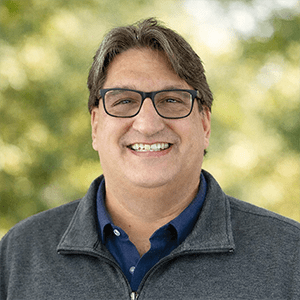 David L. Delmonico\, Ph.D.\, LPC is a Professor at Duquesne University in Pittsburgh\, Pennsylvania. Dr. Delmonico and a graduate of Kent State University&rsquo\;s Counseling and Human Development Services Program. \;He conducts research\, consultation\, and training on topics such as cybersex\, cyberoffense\, and cybersafety. Dr. Delmonico also lectures on topics such as general Internet psychology and sexually addictive and compulsive behaviors. Dr. Delmonico is co-author of In the Shadows of the Net\, Cybersex Unhooked\, Cybersex Unplugged\, Illegal Images\, and The Illegal Images Workbook. He has published numerous scholarly articles on a variety of addiction\, technology\, and sexuality topics. Dr. Delmonico is Director of the Online Behavior Research and Education Center (OBREC) at Duquesne University and past Editor-in-Chief of the Sexual Addiction &\; Compulsivity journal.
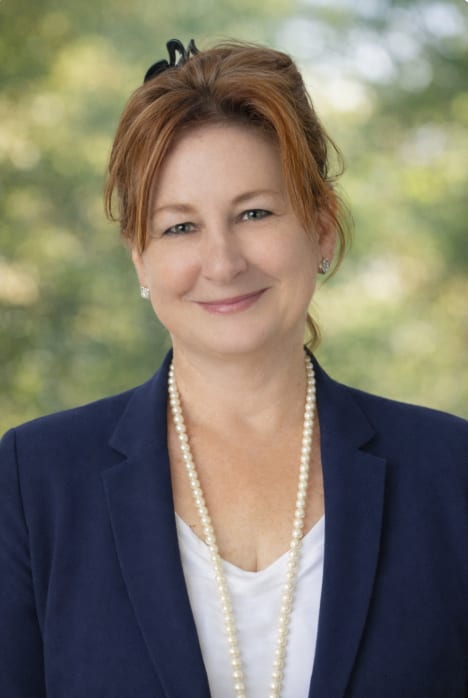 Elizabeth Griffin\, MA\, is a licensed Marriage and Family Therapist with forty years of experience in assessing and treating adolescents and adults struggling with problematic sexual behavior\, including online sexual offense behavior. She has worked in diverse settings\, including inpatient and outpatient facilities\, the military\, prisons\, and civil commitment programs. Ms. Griffin lectures and consults nationally on the assessment and treatment of sexually compulsive behavior and sexual offense behavior. For the past 30 years\, she has specialized in the evaluation and treatment of online sexual offense behavior. Ms. Griffin has also published numerous academic articles on issues related to problematic sexual behavior and is a co-owner of Internet Behavior Consulting. Her latest publication is The Illegal Images Workbook: Understanding and Changing Harmful Online Sexual Behavior. Ms. Griffin is a member of the Association for the Treatment and Prevention of Sexual Abuse (ATSA) and serves on its Board of Directors.
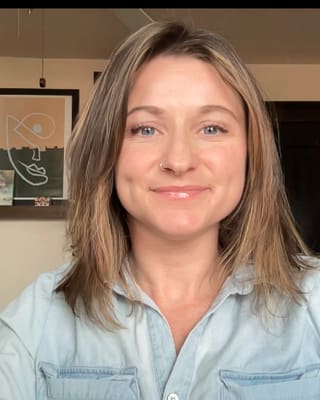 Ali Tabb\, Ph.D.\, LCSW\, is a clinical social worker\, educator\, and researcher specializing in adolescents with harmful sexual behaviors\, adolescent sexuality\, pornography use\, and digital media. She is the owner of Breyta Counseling and Consulting and has more than a decade of clinical experience working with adolescents and families across residential\, outpatient\, and child advocacy settings. She is a Credentialed Sexually Abusive Youth Clinician and is licensed as a clinical social worker in Indiana and California. Dr. Tabb earned her Ph.D. in Social Work from Indiana University\, where her dissertation examined clinicians&rsquo\; perceptions and practices for addressing pornography use with adolescents in treatment for harmful sexual behaviors. She teaches social work courses at Indiana University and the University of Tennessee\, Knoxville\, and has presented nationally and internationally on pornography\, adolescent sexual behavior\, digital media\, and clinical practice with youth who have engaged in harmful sexual behaviors. Her scholarship also includes research on gender-diverse youth and access to gender-affirming care. Dr. Tabb is a member of the Association for the Treatment and Prevention of Sexual Abuse (ATSA) and serves on its Board of Directors.
This program is Approved by the National Association of Social Workers (Approval # 886517002-9189) for 3 continuing education contact hours.
LOCATION:
UID:e.3609.1614769
SEQUENCE:3
DTSTAMP:20261023T160346Z
URL:https://members.atsa.com/chaptereventscalendar/Details/webinar-beyond-restrictions-assessing-and-treating-sexual-offense-behavior-in-a-digital-world-1899881?sourceTypeId=Hub
END:VEVENT
END:VCALENDAR